15 October 2006

Grevillea robusta

I've been out taking photos of the garden today and I want to put them all up on the web! Look at this one. No, look at me. No me, me, me.

Pheww!

I've settled on this one because it is a closer look at the Silky Oak's magnificent flowers. She flowers reliably every year, and every year birds flock to feast on the nectar in the flowers. Some we only see at this time of the year. Noisy Friar birds for instance. We always hear them first hence the name. They are indeed very noisy as they squabble amongst themselves for the best possie. This is part of my orange and yellow section of the garden and it is looking pretty darn good.

Look at me Posted by Picasa

Willie Wagtail

We spotted this nest in a fairly open, very conspicuous location not far off the ground. Our great dane could jump up and take the eggs if she actually knew it was there, but fortunately she hasn't noticed. We walked past and the parents flew at our heads in an attempt to drive us away. Their behaviour told us there was a nest nearby and once we really looked we soon found it. Now that there are three little eggs inside we avoid the area.

These are brave, feisty little birds. I love to see them around the garden. They twitter away quite nicely most of the time and catch insects very cunningly on the wing. Now though they are intent on keeping us well away from their nest. I hear them calling of an evening "Sweet Pretty Creature, Sweet Pretty Creature" with an up inflection on the end of the drawn out Creature. Very distinctive call it is too.

Info on Willie Wagtails here
<Click to listen to the song of the Willie Wagtail

Dendrobium tetragonum

We are lucky enough to have a small creek running through our property. It winds backwards and forwards somewhat snake like; which causes small pockets of bush between steep creek banks. This orchid, Dendrobium tetragonum was growing attached quite high up on the trunk of a tree on one such peninsula. All these areas have special names, some rather ordinary like, The Peninsula, but also a lovely area called 'Mirror Water City', this last named by our daughters many years ago. They had a cubby built there from Palm fronds and spent many happy hours playing with their cousins, but that's another story. I was talking about the orchid.

We were so excited to see it because we walk around the place regularly and hadn't noticed it before. And we were fortunate enough to visit when it was in flower. The next day the flowers looked much the worse for wear so we were extremely lucky.

I tried to find it in books and by looking up Australian orchid web sites without much luck, so I emailed an orchid enthusiast and he was able to tell me the next day exactly what it was. It turns out it's very common. Pooh! I didn't want to hear that. I wanted to have discovered a new orchid which I could call the Christinii orchid. Posted by Picasa

12 October 2006

Resting in the Garden

Sometimes I can actually sit down in the garden! Posted by Picasa

Ornamental Poppy

A flower much beloved by the bees.

If you look closely you can see them at work in the centre. Each flower is shortlived.

I took this photo in the morning and by mid afternoon the flower was spent. Posted by Picasa

Kniphofia 'Little Maid'

What a tough little beauty this is. Flowers reliably no matter the conditions; rain or drought it really doesn't care too much. I began with one plant and have now grown a long row underneath a Silky Oak, plus placed clumps strategically throughout the garden. In this particular spot I wanted the combination of yellow and orange the tree and the pokers made at this time of the year. I had a row of dear little pokers in front of this which were a lovely orange, called Kniphofia 'Orange Butter', but most of them died during the last dry spell. I still have a few so the potential for increasing and building on my theme is still there.

After the pokers finish I have little orange and yellow Cosmos self sowing through. They are lovely too. Posted by Picasa

8 October 2006

Australian Native Birds

One of the things I am most proud of with my lovely garden, developed over 15 years from a boggy weed infested paddock, is the habitat my husband and I have created for native birds. When we first arrived here we had Indian Mynahs, a terrible pest bird in Australia, and not much else. As we planted more and more native plants they moved out and the natives moved in. At first they visited only while plants were in flower and then left but now I am pleased to say we have many, many Superb Fairy Wrens living here all year round and raising their families. We have a large flock of Firebrowed Finches all year round as well and the beautiful little Eastern Spinebills and many others that visit for a time and then move on.

To see photos and learn a little about each of these birds then follow this link.
Click here

To listen to the song of a Superb Fairy Wren try here.
Click here

Did you know that the early settlers from England said thatAustralian birds were dull and had no songs?

We have what I would call a messy garden, areas are left weedy, grassy and overgrown. This is habitat for the birds and it really pays off. The Satin Bower birds can be a bit of a pest eating my fruit and vegetables but they are beautiful and interesting to observe.

Try here for more bird songs
or here
or here

Aesculus hippocastanum x carnea (Horse Chestnut)

This is a very beautiful tree which I first noticed while living in Canada. It has enormous large "five fingered' leaves, and flowers which sit like candelabra all over the outside of the canopy. Horse chestnuts are a very big tree and not really suitable for small back yards, nevertheless I was determined to try to grow one when I returned to Australia. I had some difficulty finding one, eventually having to buy mail order from a rare plant nursery in Victoria. So far my little tree is surviving and this year has two flower spikes. It likes a rich moist soil but has to make do with clay, which was exceptionally dry this last two years.

So far so good. Posted by Picasa

Spring Growth

I love this view across the water lily dam.
The yellow water irises in the foreground are always first to flower; but the various shades of blue and purple will soon follow.

The yellow tree is Gleditsia 'Sunburst' and the bright green on the right is a Claret Ash with Bougainvillea on the pergola.

To me it all screams Spring! Posted by Picasa

1 October 2006

Rosa Altissimo

What a lovely thing this is! Blooming extremely well at the moment but does suffer from blackspot in our humid climate. Still it usually manages to have at least one bloom all spring and summer.

I have roughly 70 roses in my garden, (I did a quick count), but there probably are some I've forgotten and all have to be caged to keep the hungry kangaroos away.

All also have to be sprayed for blackspot. For the last ten years I've refused to spray - but last year and this I've succumbed to the bicarbonate soda and fish emulsion recommended by rose experts as being friendly to both me and the other bugs which live in and around my roses.

Last year we had little rain, but heavy dews every night, which really decimated the rose leaves - so reluctantly I spray. It took me about 3 hours this morning - something I have to repeat in ten days time. Urgh! Posted by Picasa

Macadamia

Our macadamia trees are smothered in sweetly smelling racemes of flowers right at this moment. The bees adore them and I think they're extremely lovely as well. We have a little copse of macadamia trees but these are a little unusual because of the beautiful pink colour; the other trees have cream flowers. We usually have a very good crop of nuts too, although last year was disappointing, I presume because of the drought.
Info on Macadamias here Posted by Picasa

Leptospermum 'Outrageous'

I am so impressed with this plant! I now have three in various areas of the garden and I am going to plant many more. The first one went in 2 years ago and grew very slowly. The area of the garden where I put it is very tough on plants; hard dry clay with competition from large spotted gums, but it grew and flowered last year. I remember being so disappointed with the flowers! I can't imagine why. What one earth was I thinking?

Anyway I planted more because it was at least flowering and all of them this year are breathtakingly gorgeous with these beatiful flowers smothering the branches. They grow about 2m x 1.5m so I can hardly wait for the display I will have in the future. They certainly have the Wow! factor if that is what you are after. They are also incredibly tough. One I have in full sun, one in semi shade and one even shadier than that. All have performed well without any extra water at all. Posted by Picasa

Oenochroma vinaria

Pink Bellied Moth.

We had a very warm day last week and that evening we were absolutely inundated by moths. We tried to have the windows open to collect the cool breeze but were forced to close them due to the presence of hundreds of insects trying to come in to the light. The glass of every window was covered, and I mean literally covered, with moths of all sizes - simply hundreds of them so it was a gorging night for all the insect eaters I guess.

This pretty pale pink moth caught my attention because of its soft pastel shade of pink. One photo was taken looking out the window and the other outside looking in.

I tried to find a name on the internet but really the information is so vast I found it impossible. I probably should have tried typing in pink moth but instead I asked an expert for his opinion. He kindly gave me the name.
To find out more about this moth click here Posted by Picasa

25 September 2006

Syncarpia glomulifera

These are the flowers of the Turpentine, a lovely tree which is absolutely smothered in flowers right now. You can see why they used to belong to the "gum tree" family with those flowers.

They have very interesting little woody capsule seedpods too. Posted by Picasa

Princess of Monaco

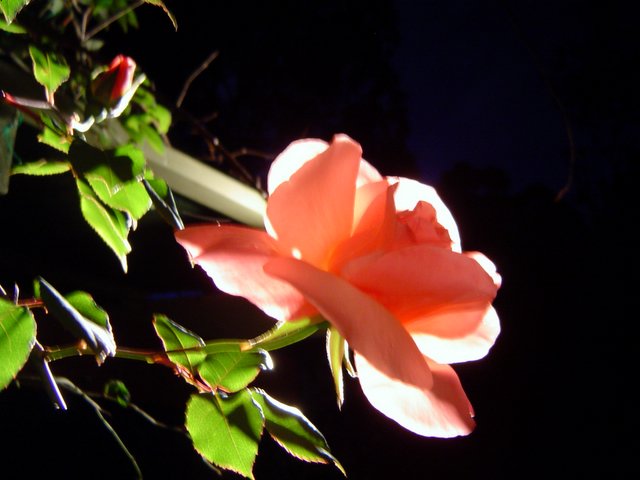
This lovely rose was grown from cuttings especially for me. I have three plants all growing closely together and supporting one another. They are a few years old now and this year growing very strongly indeed, so I think they must have finally settled down. These are the first two flowers and there are many more buds to come. It is such a beautiful flower with an equally enticing perfume, but wickedly prickly as you can see by the size of its thorns. Posted by Picasa
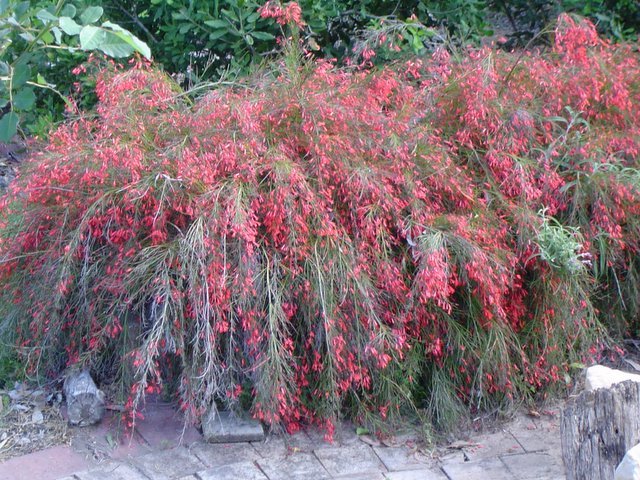
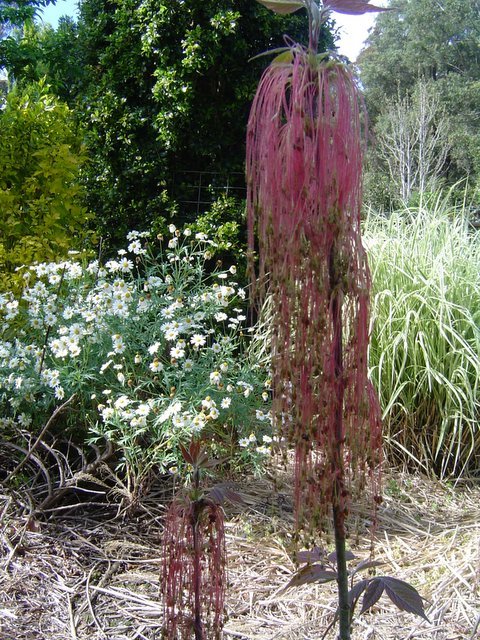
Again the name escapes me! Perhaps I'll make up all my own names and not tell anyone that I can't remember the real one. That might work. Anyway I love this plant for the colour of its leaves, for the gorgeous shape of its leaves and the red spikes of flowers. This is another plant which the birds adore. I have read that it can be weedy but here I have to pamper it to get it to grow well. White fly can be a problem but otherwise it's a lovely, lovely plant.
My original cutting came to me as a gift from the teapot man. Posted by Picasa
I can't remember the name of these plants so
I'll have to come back at a later date at pop it in.
I must be having a senior moment. Very irritating!
They flower like crazy after heavy rain and the nectar feeding birds love them. The Eastern Spinebills spend hours hovering over the flowers. I didn't realise that they could hover almost like hummingbirds but they can! It's interesting what you notice when you really pay attention.
Last year we had Superb Fairy Wrens nesting amongst the leaves because it is a thicket in there. Frank's Mum had a bit of fright as she was walking along and something "flew" at her. She was relieved and excited to find it was a baby wren practising flight. Posted by Picasa

Pawlonia and water iris


Flowering now - Pawlonia and yellow water iris. These irises are always the first to flower but they are extremely vigorous and so we are continually weeding them from the dam. We have tried to remove them completely but so far haven't succeeded. They are beautiful though. Posted by Picasa

17 September 2006

Scilla, Heartsease and Tritelia

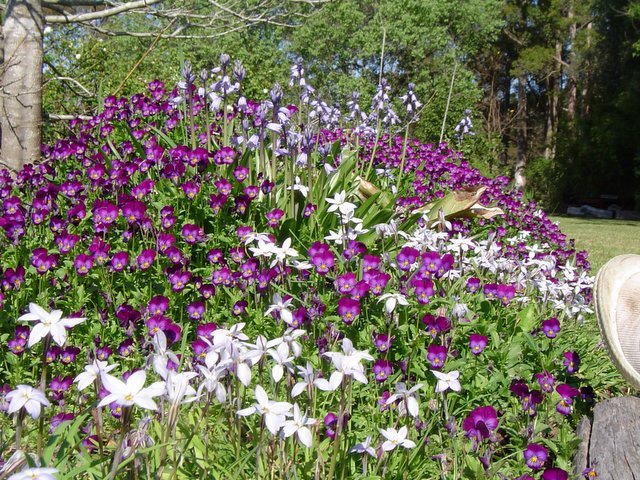
I mentioned these three flowers a week or so ago and they are still looking lovely. Pictures don't quite do them justice. They reliably come up year after year, but this year they are spectacular. Cow manure works its magic again.

I have been working so hard in the garden over the weekend just trying to fill up any bare gaps to squeeze out the weeds - sounds simple but it isn't. This little combination has worked well and the vincas are looking very pretty in another section but there are still bare areas. Posted by Picasa

15 September 2006

Dendrobium speciosum

Otherwise known as Australian Rock Lilies. Here's another plant that has looked very sad and sorry for itself these past two years but give it a couple of heavy showers of rain and it outdoes itself putting on new clothes. Not only are these beautiful to look at but they smell very nice too.

I've had this specimen for 25 years and my father grew it before me, proving they are very slow growing. We have it mounted on a large old tree root with summer shade and winter sun. Every year I think about moving it so that it has more sunlight in summer but so far I just haven't managed to do it. This year it has 20 flower stalks. Posted by Picasa

Babiana

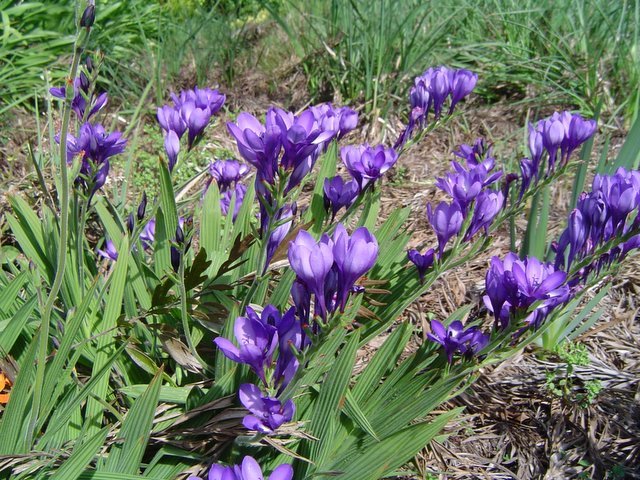
These beautiful little bulbs are perfect for the warmer climate where many bulbs will only last the one season. These were given to me by a lovely man I met at a Garden Club many years ago. Just as some pets are said to resemble their owners this lovely little round man was known affectionately to all and sundry as the teapot man.
He definitely did have an affinity with his namesakes because he collected teapots and judged teapot competitions. He was a generous soul, always willing to share his knowledge and his plants. If you admired something in his garden you would most times find yourself with a package as you left containing the the treasures.
It was in such a way that I gained my first Babiana bulbs. You're not forgotten Bob Wilmott. Posted by Picasa

Acer negundo 'Violaceum'

I've grown a couple of Acer Negundos, commonly known as box elders, over the years because I found when choosing trees they had all the desirable characteristics I was looking for. First and foremost they had to be tough. Box Elders are almost unkillable; and the second was that they could tolerate having 'wet feet'. There are many trees regarded as very tough, but few like having their roots in cold wet soil, which is what happens here every winter (except the last two when there was no rain at all)!
Sadly Box Elders self sew and are generally regarded now as a weed with potential devastating consequences if allowed to spread willy nilly.
In the place of the baddies I have planted this beauty. Still a Box Elder but with beautiful violet flowers which are sterile. The plant went in last year and has grown quite well without any extra water, and is now putting on quite a respectable show of flowers. Posted by Picasa

Acer palmatum 'Atropurpureum'

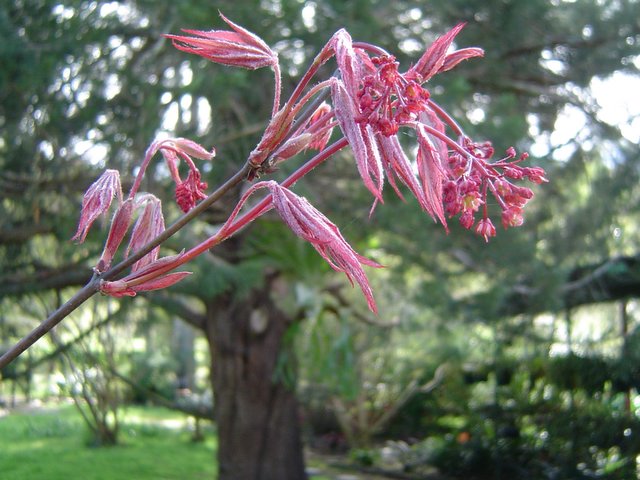
Spring is the time when plants go berserk with flowering, as we know. Here though is the tiny delicate flower of one of the Japanese maples. You have to be really paying attention to see these in the garden because they come and go very quickly, just a couple of days really - plus they really are very tiny.

Anyway we don't grow maples for their flowers do we - the main show is in the leaves. Posted by Picasa

10 September 2006

Blossom Time!

It's raining! Yayyyy! The tanks have been full for some days now, the dams have joined the party and the creek is running. Oh Frabjous Day!
It's wonderful to be so excited by rain. It's still pouring down as I write (truth be told it could stop now for a week or two and I would be happy), but mustn't grumble. Posted by Picasa

9 September 2006

Syzgium 'Pink Cascade'

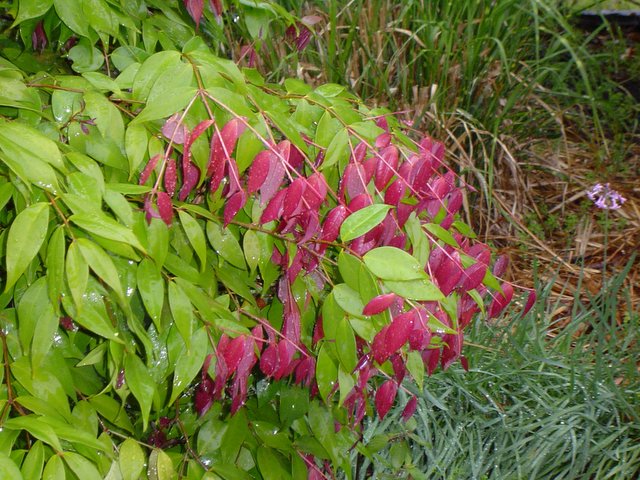
Colour in the garden doesn't just come from flowers. These pink leaves are appearing after the rain all over my beautiful weeping Syzgium. The bushes also have clusters off red/pink flowers, but I have to choose whether to have flush after flush of pink leaves or one lot of pink flowers. It seems I can't have both. Cutting off the new growth forces pink re-growth a month or so later, but also limits flowering.
What to do? At the moment I am regularly cutting back the leaves but as a kind of compromise I've planted three of these and one I leave alone, so that one flowers for me. Posted by Picasa

7 September 2006

Lorraine Lee - Alister Clark Australian bred rose

I love roses, but to grow them successfully I have to continually outwit wallabies, kangaroos and possums. I have had to resort to fences, so my garden sees my rose bushes imprisoned in a variety of gaol-like beds. If I don't lock them away the Eastern Grey kangaroos would feast each night on their new shoots until the roses give up and die.

Rosa Lorraine Lee is a beauty. Tough and prickly she is a climber who reaches up and away from the roos only to place herself just where the possums can have a nightly picnic, safe from predators.

This gorgeous colour contrasts brilliantly with my house. It used to be painted a safe pale green but now is a vivid bright blue. Strictly speaking only 3/4 of it has changed colour - I'm still working on the rest.

The blue absolutely makes my heart zing. Posted by Picasa

Good old standby

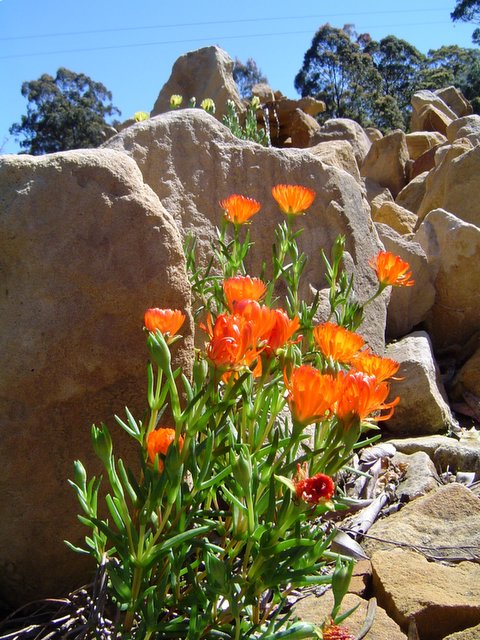
Pigface (Mesembryanthemum)are fantastic plants which survive just about whatever the weather throws at them. They grow easily from little pieces and flamboyantly flaunt themselves very early in spring.

In my garden at the moment I have patches of orange here and there, contrasting beautifully with white blossoms of all sorts. Mostly double flowering peaches (Prunus), May bushes (Spirea) and Magnolia Stellata but also the native Clematis (Clematis aristata) and Wonga Wonga vine, (Pandorea pandorana). Patches of purple pop up here and there as the violets (Viola family) finish off, together with the purply blue of Tritelias together with Johnny Jump Ups, also known as Heartsease.

The combination of Tritelias with Heartsease is stunning by the way. I always make notes (mostly mentally) I'm not really organised enough to walk around with pencil and paper, though I should be. And my mental note says to plant lots and lots of the above combination underneath all the deciduous trees because I will be well rewarded. Must spread more orange about too.
The list of jobs to do is so long! Posted by Picasa